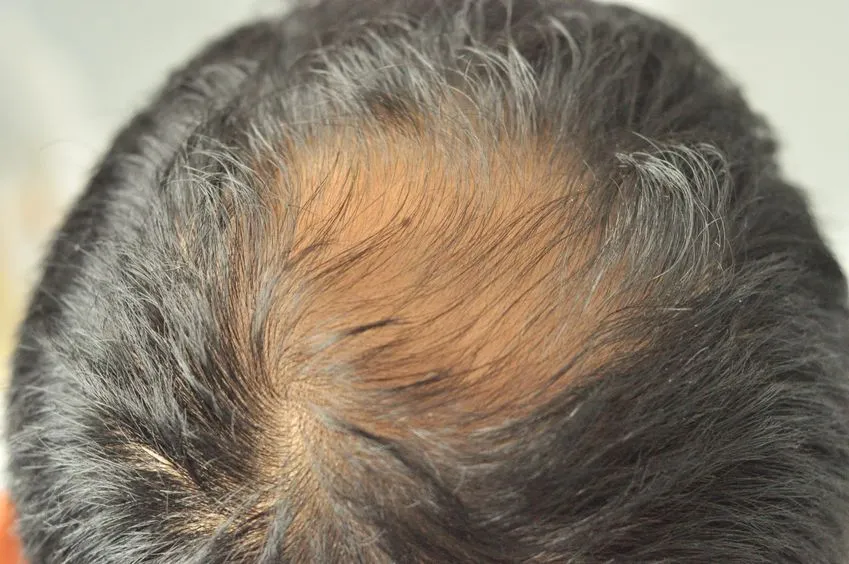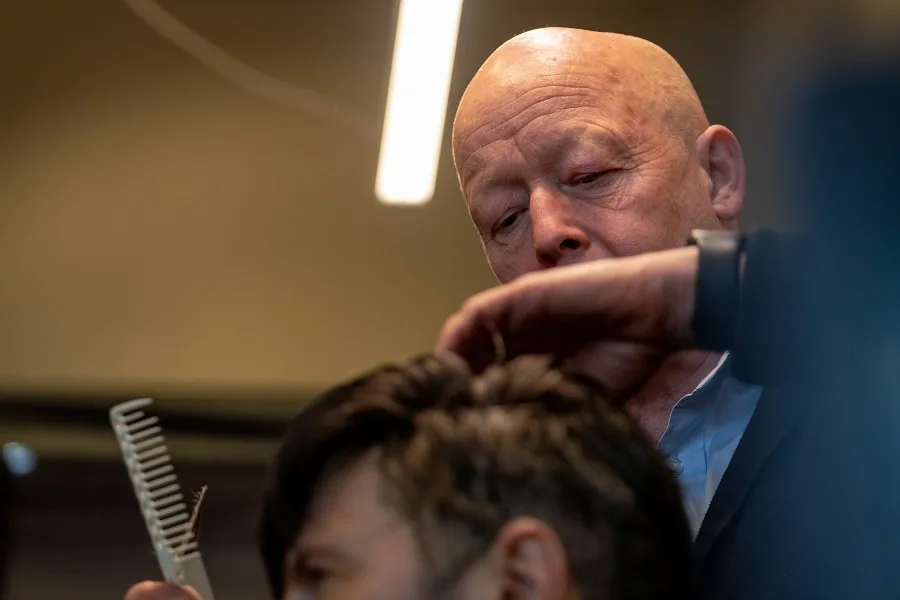
Have you ever caught your reflection in a shop window and focused only on the thinning patch at your crown? It is a moment that millions of UK residents know all too well. While society often dismisses hair loss as “just part of getting older” or a “cosmetic vanity,” the emotional weight is anything but superficial. For many people, hair is not just keratin and pigment. It is an anchor for identity, youth, and self-assurance. When that anchor starts to drift, the psychological impact can be profound.
According to 2026 data, over 15 million people in the UK experience some form of hair loss. That is, more than one in five people nationwide (Chemist4U, 2026). Despite its prevalence, the stigma remains. Research highlights that 85% of participants feel their self-esteem is negatively affected by thinning hair. There are many reporting themes of diminished attractiveness and even social withdrawal (BAD, 2025).
If you have felt the urge to skip a social event or hide under a hat, you are not alone. However, there is a shift happening in the way we reclaim our image. The rise of non-surgical hair replacement is fundamentally changing the psychological recovery of those facing hair loss.
Is the Fear of Surgery Holding Your Confidence Hostage?
For years, the gold standard for “fixing” hair loss was the surgical transplant. While effective for some, the invasive nature of the procedure, involving scalp cuts, local anaesthesia, and a lengthy “ugly duckling” healing phase, can be a source of significant anxiety. For many, the prospect of surgery is simply too daunting, leading to a state of “grooming paralysis” where the hair continues to thin and confidence continues to tank.
This is where a non-surgical hair transplant (often referred to as a high-end hair system or membrane) becomes a psychological game-changer. By removing the “medical” barriers, it offers a path to restoration that is:
• Painless and Risk-Free: There are no needles, no scars, and no risk of surgical complications.
• Instant Gratification: Unlike surgery, which can take 6–12 months to show results, non-surgical systems offer a pretty much immediate transformation.
• Reversible and Flexible: You aren’t “locked in” to a permanent surgical hairline. You can adapt your look as you age or as styles change.
Why Does ‘Instant’ Result in Better Mental Health?
The psychological burden of hair loss often stems from a feeling of powerlessness. You watch your hair fall out, and you cannot stop it. Surgery requires a different kind of patience. You have to wait nearly a year to see if the grafts take. During that year, the mirror remains a source of stress.
Non-surgical hair replacement breaks this cycle of waiting. The moment you step out of the clinic with a full head of hair, the “external” problem is solved. This allows the “internal” healing to begin immediately. Recent studies indicate that 72% of people using cosmetic hair solutions report significant improvements in social reintegration and confidence (BAD, 2025).
When you no longer have to worry about how the wind blows or how the office lights hit your scalp, your brain is freed up to focus on your career, your relationships, and your life. It is not just about the hair; it is about the mental “bandwidth” you get back.
Can Non-Surgical Options Really Look Natural in 2026?
One of the biggest psychological hurdles for people considering hair systems is the “wig” stigma. We have all seen the unnatural toupees of decades past. However, modern technology has rendered those fears obsolete.
Today’s non-surgical hairlines use HD lace and nano-skin bases that are thinner than a contact lens. These bases are breathable and mimic the appearance of hair growing directly from the scalp. When matched with high-quality human hair that follows your natural growth direction, even close-up inspection fails to detect it. This “stealth” factor is vital for confidence. Knowing that your hair looks 100% natural allows you to move through the world without the fear of being “found out.”
Is It Time to Reclaim Your Reflection?
If hair loss has made you a spectator in your own life, it is time to consider a different approach. You don’t have to go under the knife to feel like yourself again. The non-surgical route isn’t a “fake” fix; it is a sophisticated, modern solution to a very human problem.
The journey back to confidence starts with a single step: acknowledging that you deserve to feel good about what you see in the mirror. Whether you choose a non-surgical hair transplant for its speed or its safety, the goal is the same: to stop hair loss from defining who you are.
Ready to see a new version of yourself?
At Cochrane & Co, we specialise in the art and science of non-surgical restoration. We don’t just provide hair; we provide the catalyst for your newfound confidence.
Frequently Asked Questions
1. Is a non-surgical hair transplant the same as a wig?
Not in the traditional sense. While both are non-invasive, a modern non-surgical system is custom-designed to fit your scalp perfectly and, at the same time, is bonded using medical-grade adhesives. This allows you to sleep, shower, and exercise in it for weeks at a time, unlike a traditional wig that is removed daily.
2. How long does a non-surgical hair replacement system last?
Depending on the base material and how well you maintain it, a high-quality system typically lasts between 3 and 6 months. Many clients opt for a maintenance programme where the system is refreshed and reapplied regularly to keep the look perfect.
3. Can I still be active, go to the gym, or swim?
Yes! Modern adhesives are sweat-resistant and waterproof. Whether you are hitting the gym in London or swimming on holiday, the system remains secure. It is designed to fit a modern, active lifestyle without restriction.
4. Does the procedure damage my existing hair?
No. Non-surgical replacement is designed to work alongside your existing hair. We use protective barriers and skin-friendly adhesives to ensure your scalp remains healthy. In fact, many people find that their scalp health improves because they stop using harsh “thickening” chemicals.
5. How do I choose between a surgical and a non-surgical option?
It depends on your goals. If you have enough donor hair and don’t mind a 12-month wait and a surgical procedure, a transplant may be for you. However, if you want instant volume, have advanced hair loss, or want to avoid surgery entirely, non-surgical hair replacement is the superior choice to reinstate your confidence immediately.